RSS Feed
TOP

Are Malaysians that gullible and easily conned?

A staggering RM20mil - that’s how much Malaysians have been conned by African tricksters in the past few years in at least 11 internationally known scams ranging from Black Money to inheritances which promise non-existent wealth. That was what was reported in The Star a couple of days ago. The victims are, ironically, educated people such as lawyers, accountants, academicians and even politicians who somehow were convinced that they could become instant millionaires by investing with these people despite all the publicity about such scams.

read further.......
[−]

As mentioned in the report, these scams are not something new. It has been around under different names or schemes. It was generally known before as advance fee fraud. This form of fraud is similar to a much older scam known as the Spanish Prisoner scam in which the trickster would tell the scam victim that a (fictitious) rich prisoner had promised to share (non-existent) treasure with the victim if the latter would send money to bribe the prison guards. An even older version of this scam existed by the end of 18th century, and is called "the Letter From Jerusalem" by Eugène François Vidocq in his memoirs

An advance-fee fraud is a confidence trick in which the target is persuaded to advance sums of money in the hope of realizing a significantly larger gain. Among the variations on this type of scam, are the Nigerian Letter (also called the 419 fraud, Nigerian scam, Nigerian bank scam, or Nigerian money offer, the Black money scam as well as Russian/Ukrainian scam (also extremely widespread, though far less popular than the former). Both the so-called Russian and Nigerian scams stand for wholly dissimilar organized crime traditions, they therefore tend to use altogether different breeds of approaches.

The number "419" refers to the article of the Nigerian Criminal Code (part of Chapter 38: "Obtaining Property by false pretences; Cheating") dealing with fraud. The 419 scam originated in the early 1980s as the oil-based Nigerian economy declined. Several unemployed university students first used this scam as a means of manipulating business visitors interested in shady deals in the Nigerian oil sector before targeting businessmen in the west, and later the wider population. Scammers in the early-to-mid 1990s targeted companies, sending scam messages via letter, fax, or telex. The spread of email and easy access to email-harvesting software significantly lowered the cost of sending scam letters by utilizing the Internet. In the 2000s, the 419 scam has spurred imitations from other locations in Africa, Asia and Eastern Europe, and, more recently, from North America, Western Europe (mainly UK), and Australia, the latter three mainly done by Africans.

Some other typical scams include cases where victims of the scam are promised a lottery win (example) or a large sum of money sitting in a bank account or in a deposit box at a security company. Often the storyline involves a family member of a former member of government of an African country, a ministerial official, an orphan or widow of a rich businessman, etc. Here is an example. Variants of the plot involving the Philippines, Taiwan, China, Hong Kong, Korea, Iraq, Kuwait, UAE, Mauritius, etc. are also known. Some emails include pictures of boxes stuffed with dollar bills, scans of fake passports, bank or government documents and pictures of supposedly the sender.

With so much literature written available on the net and occasional reports of scams and frauds, one cannot help but wonder how Malaysians could still fall prey to such scams?????.


Subscribe


TOP

Mandi Roz in Damascus


Had Mandi Roz (that’s what they called it in Arabic) with friends. There are however not many restaurants that offer the dishes in Damascus. There are many though in Jeddah and Sanaa. It’s a simply rice cooked in ghee with spices added to it (I think so ….) and served with either lamb or chicken. Browsed the net for further information on it but could not find any. Anyway, it was a sit down lunch with us seated on the floor and enjoying the food with our hands. Recalled vividly those days in the kampongs where we enjoyed numerous family lunch and dinners seated on “mengkuang” mat. It tends to bring family closer together. With development, all these are merely memories.


Subscribe


TOP

Belly Dancing in Damascus


Took my visiting friends for a belly dancing show at a restaurant on the 7th Floor of Semi Ramis Hotel in Damascus to expose and educate them on some form of Syrian or Arab culture. The restaurant that evening was full of foreign tourists as well as local Syrians who came for the show. It was a memorable experience for us all especially coming from Asia. Though there are some establishments in Malaysia that offers occasional belly dancing shows, it is of totally different especially with the accompaniment of live music from traditional instruments. The show only started at 11.00 pm with a singer and followed by the belly dancer only 30 minutes later. The show ended only at about 12.30 midnight.

read further.......
[−]

Did you know the correct name for belly dancing is actually "Oriental Dance"? The Arabic name for it is raqs sharqi, which means "dance of the East/Orient", and the Turkish name is Oryantal.

Based on information gathered from various blogs, I shared the following:

True historical data on belly dance is fragmentary -- there is relatively little documentation on women's work and activities throughout the age of literacy. Current theories on the history of belly dance are a confusing mixture of speculative extrapolation and personal bias which is then often presented as historical fact. It is hard to say when "belly dancing" started and where. Despite the lack of accurate historical information, a few points can be agreed upon. Belly dancing as it is known today is very old. It retains its connection to fertility and eroticism by being an indispensable feature at weddings in many Middle Eastern countries, performing the multifold purpose of getting the bride and groom (who may have just met) in the mood, making a blessing of fertility on the couple, and providing entertainment for the guests. Today belly dance is enjoyed variously for its artistry, ethnicity, beauty, healthy eroticism and fun!

The movement vocabulary of belly dance is a conglomeration of styles from many regions-Lebanon, North Africa, Egypt, the Arabian Gulf, Turkey - as a result of cultural exchange historically through trade and shifting national boundaries. While Middle Easterners make the distinction between "city dance" (stage, cabaret) and "country dance" (regional folk dances), Westerners use the umbrella term of "belly dance" to refer to a broad range of styles united in the use of certain isolation movements, the most prominent and pervasive of which are the isolations of the hips. In addition, isolations of the chest, shoulders, head, hands as well as serpentine and undulating movements of the torso are often found. Another common trademark is a varying degree of flirtation and coquetry. The rhythms and instrumentation used from area to area often have some commonalties despite great regional variations but in all there is an emphasis on percussion.

Across borders and cultures, "belly dance" is recognized as a dance style of its own. There are several points that make oriental dance different from other dance forms and reveal its diverse heritage. It has traditional associations with both religious and erotic elements. This ambiguity has caused belly dance to be disdained, scorned, and loved by many. Its apparent origins are the fertility cults of the ancient world.

Many experts say belly dancing is the oldest form of dance, having roots in all ancient cultures from the orient to India to the mid-East. Probably the greatest misconception about belly dancing is that it is intended to entertain men. Throughout history, this ritualized expression has usually been performed for other women, generally during fertility rites or parties preparing a young woman for marriage. In most cases, the presence of men is not permitted.

In the word of a belly dancer, Nadia Gamal in an interview with Scoop Magazine:
“I am NOT a belly dancer. I have never been one, and never will be. What I do is not what Hollywood vulgarly calls ‘belly dance’, but it is art. I have traveled the world to prove that my dance is not a dance of the belly but a refined, artistic dance full of tradition, of dreaming and beauty. Oriental dance is primarily an expressive dance, in that resides the beauty”


Another picture ..... the beauty of belly dancing!!


Subscribe


TOP

A town named Quneitra, Golan Heights


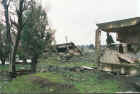
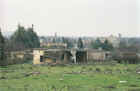
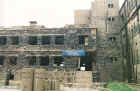
Golan Heights is internationally known primarily due to its occupied status by Israel since the 1967 wars. With the time available to my visiting friends, we decided to visit and see with our own eyes the reality on the ground over what is internationally being debated. Hence the visit to this town in the Golan Heights called Quneitra. It is situated in southern Syria, bordering Lebanon, Jordan and Israel. One could only visit it by obtaining a special permit from the Ministry of the Interior. Got the necessary permit and off we went (me and a couple of friends visiting Syria) in two separate cars. The area that we visited now lies in the demilitarized United Nations Disengagement Observer Force (UNDOF) Zone between Syria and Israel, a short distance from the de facto border between the two countries. Quneitra lies undisturbed ever since, a ghost town riddled with land mines, an open-air museum of Middle-Eastern wars (Syria now shows it off as proof of Israeli malice). Church domes and minarets, blackened and broken, rise above the wasteland..

read further.......
[−]

Quneitra is indeed a gorgeous place to visit despite what had happened to it. However, I would not say that our group enjoyed the visit – how could one claimed to be enjoying walking through the bulldozed ruins of a once-normal town. Seeing the extent of destruction left behind by Israel, one could really sympathize with the feelings of those Syrians whose families come from the Golan and who cannot live there now. We were informed that families kept bringing the younger generations to visit their lands and what is left of their homes to keep the memories alive and continuous hopes of coming back to the land.

We left Quneitra with mixed emotions thinking how fortunate we as Malaysian has been and at the same time thinking of the suffering of the local Quneitrans and also those Syrians that are still living in the Occupied Golan Heights.

Descriptions of Quneitra by media reports in the past:

“Direct evidence of the city's condition was provided when it was filmed on 12 May 1974 by a British television news team which included the veteran journalist Peter Snow, who was reporting for Independent Television News on the disengagement negotiations. His report was broadcast on ITN's News at Ten programme. According to The Times' correspondent Edward Mortimer, "viewers were thus afforded a panoramic view of the city, which had stood almost completely empty since the Syrian army evacuated it in 1967. It could be seen that many of the buildings were damaged, but most of them were still standing." After it was handed over, "very few buildings were left standing. Most of those destroyed did not present the jagged outline and random heaps of rubble usually produced by artillery or aerial bombardment. The roofs lay flat on the ground, 'pancaked' in a manner which I am told can only be achieved by systematic dynamiting of the support walls inside." Mortimer concluded that the footage "establishes beyond reasonable doubt that much of the destruction took place after 12 May—at a time when there was no fighting anywhere near Quneitra”


Some other pictures ..... trail of destruction!!


Subscribe


TOP

A Cultural Evening to Cherish


It was indeed a cultural evening which will be long cherished by all those presence at the Four Seasons Hotel in Damascus. Dancing to the upbeat traditional Malaysian music, the crowd was highly appreciative of the performances of the dancers by clapping their hands to the rhythm of the music. The cultural troupe was flown in by Malaysia Tourism Board as part of their road show to promote Malaysia to the Syrians. As a Malaysian residing abroad, one would always tend to look forward to such events where one could be proud to showcase our culture to others. As a country that is well known for its multi-ethnicity, multicultural and multi-religious society, Malaysia has proven to the world that peace is achievable so long as society remains tolerance and respect one another. That makes Malaysia such an attractive country to foreigners besides of course the natural beautiful beaches and mountains that surrounds the country. .

read further.......
[−]

It is however unfortunate that Malaysia has been hogging the media limelight due to the wrong reasons of late. The political fiasco in Perak and the high incidents of petty crimes such as snatch thefts are not helping the serious efforts of the Malaysia Tourism Board to promote the country as a preferred holiday destination. On another note also, Malaysia Tourism Board need to remain focus on the quality of tourists into the country and not be too engrossed with only number of arrivals into the country. A comprehensive study must be conducted to ensure that Malaysia receives “real” tourists and not travelers that used the visa upon arrival facilities for other reasons which could jeopardize the security of the nation in the future. Malaysia must implement a mechanism whereby unwanted elements such drug traffickers, economic refugees, etc. could be weeded out from availing to such facilities in the future.


Subscribe