RSS Feed
Showing posts with label Syria. Show all posts
TOP

Farewell Syria (Thoughts penned on 10 March 2010)


Counting the days for my imminent departure from Damascus, upon the completion of my tour of duty, makes me realize that there is still much more for me to see, learn and experience in Syria. The kind hospitality and friendly disposition of the people makes my stay interesting, despite my obvious language handicap. Guided by Malaysians, including students, that have resided in Syria for quite some time and that have acquired proficiency in the Arabic language, I had managed to travel to some interesting places throughout Syria, as reflected in my previous blogging notes, though many more I would had to miss.


read further.......
[-]


I feel proud and elated moving around Syria when the mention of Malaysia brings positive response from the Syrians. The names of Tun Mahathir and other leaders always cropped up in my numerous conversations with the locals and their aspirations to be able to emulate Malaysia’s successful economic transformation. They too feel proud that Malaysia, being an Islamic nation, had proven that economic development is achievable and within their reach. They strongly believe that they too could get out of the so-called poverty, economic malaise cycle one day. And from what I see during my brief stay in Syria, I too believe that Syria would be able to transform her economy much faster than some of the other Arab countries, provided that the government continues with its efforts at restructuring the economy as well as bringing the bureaucracy up to meet the fast paced demand of a developing society and economy.


The many friends and acquaintances I leave behind, at both in the official and personal capacity, I say thank you or “shukran jazillan” and hope that we would be able continue to keep in touch in the future.


In And Out


Subscribe


TOP

Train Ride to Aleppo


Aleppo, which lies about 350 km to the north of Damascus, is another interesting city worth visiting while in Syria. It is the second largest city in Syria and famous for its citadel, mosques, schools, tombs and baths. It used to be the crossroads of traders especially those in the Mediterranean region and had a major role in the development of Syria's trade especially in the early nineties. It is also said to have longest covered souk in the Middle East. During the brief visit to Aleppo (about 28 hours) – from midday Friday till 4.40 pm Saturday, we managed to visit and explored the Great Mosque (Umayyad), the Citadel and the souk as well as an evening at the new shopping mall. Had dinner at Marrybrown, a Malaysian fast food chain.


read further.......
[-]


Briefly, the Great Mosque was built by the Umayyad Caliph al Walid, and has an enormous 45-meter minaret, which is completely detached from it, built by the Seljuks in 1070. Similar to the one in Damascus, there is a large courtyard between the main entrance and the prayer hall. Inside the prayer hall and to the left of the mihrab is a finely tiled chamber that is said to hold the remains of Prophet Zakaria, father of Prophet Yahya, whose remain lies in the Umayyad mosque in Damascus.


The Aleppo Citadel, meanwhile, is a magnificent fortress and considered to be one of the oldest in the region. The present structure and designs of the Aleppo citadel is slightly different from the Cracs du Chavalier in Homs.

The Aleppo souk, unlike the Damascus one, is covered by stone archways for about 30km. This makes it the longest covered souk in the Middle East. The souk is made up of a complicated maze of narrow cobbled streets that one could easily lost oneself as one moved from shops to shops. Bought some antique lamp shades and other trinkets as souvenirs to remind me of my trip to Aleppo.

There are other interesting places that one could see in Aleppo but I had to miss it this time around because the Latakia Express bound for Damascus has sounded its siren and we have to catch it fast.


Subscribe


TOP

Ancient city of Palmyra


Located about 230 km northeast of Damascus lies the ancient city of Palmyra, a great city over 2000 years ago, an important crossroads of trade and cultures between the Far East and the Mediterranean. Palmyra is one of the favorite tourist destinations in Syria where one could see the monumental ruins of a complete city and be brought face to face with the great achievements of past civilization. The magnificent remains showed the art and architecture influence of Graeco-Roman techniques with local traditions and Persian influences. The guide, Najib, when enquired told us that the buildings were built during the reign of the great Queen Zenobia.


read further.......
[-]


The ruins, covering an area of about 6 square kilometers, include Baal-Shamin Temple, Bel Temple, Arch of Triumph, the Amphitheater, the Baths, the Straight Street, the Congress Council and the Cemeteries. There were not many tourists when we were there and was informed that January is considered a low tourist season for Palmyra due to winter. However, the weather was pleasant when we were there. We also met with a group of Malaysians that were on their way to Palmyra when we stopped for coffee at one of the Baghdad Café along the highway. The highway, from Adra to Palmyra, was practically void of traffic with the exception of the occasional trucks and tourists buses. The whole trip, including the drive, takes more than 12 hours, from 8 am to 7 pm.


After visiting Petra in Jordan and Palmyra in Syria, both stands out with its own unique features. To me the main difference between the two is that in Petra, the ruins are actually carved out of mountains while those in Palmyra are built on flat land. Furthermore, Palmyra showcased an actual city in existence which one could easily visualize within the 6 km area.


Subscribe


TOP

Ma'lula and Seidnaya


Went driving out of Damascus during the New Year holidays and visited Ma’lula and Seidnaya. It’s just a half day trip though! Located about 60 km out of Damascus and 1500 meters above sea level lie the picturesque town of Ma’lula, where the houses are being constructed along the face of the mountains, just like a fairy tale town of houses carved out of mountains. Aside from that, Ma’lula has its own history to tell the world and its visitors.

There are two historic Christian monasteries in Ma'lula: Saint Sergius is a Greek Catholic church dedicated to Saint Sergius while the other is a Greek Orthodox church dedicated Saint Thekla. Legend has it that St. Thekla, one of the pupils of St. Paul, was fleeing her pagan father’s guards when she found herself trapped against the face of the high rocky mountain. Her passionate prayers and tears caused the mountain to split, allowing Thekla to escape. Today Thekla’s tears trickle down into a grotto forming a pool, where believers collect water for its miraculous powers.


read further.......
[-]


The other special significant of Ma'lula is that her inhabitants still speak Aramaic, the language spoken by Christ. Only two other neighbouring villages, Jaba'din and Naj'a speak the same language. The word Ma'lula means "entrance" in Aramaic. Heard the language being spoken when we were at a souvenir shop browsing when the shop owner spoke with a delivery man. It really sounds different from Arabic, Latin or others that we are familiar with.


On the way back to Damascus, we decided to take another route from the way that we came which enabled us to visit another town, Seidnaya, which has another historical landmark. Seidnaya lies about 30 kilometers from Damascus. The town is well known for its Christian heritage, similar to Ma’lula. After Jerusalem, Seidnaya has been the most famous center for Christian pilgrimage in the east since the sixth century A.D., when a vision of the Virgin Mary appeared to the Byzantine Emperor Justinian while he was hunting a deer in the area. The deer miraculously transformed into the Virgin Mary, who asked him to build a shrine in her honor on the site. The convent at Seidnaya contains one of the most important icons in the Christian world, believed to have been painted by St. Luke the Evangelist.

Both town, Ma'lula and Seidnaya, are unique villages, portraying a strange mixture of past and present, reality and legend, sanctity and beauty which should not be missed by anyone having the opportunity to land in Syria..


Subscribe


TOP

Brief Sojourn in Petra


Petra is one of the places that I planned to visit since my arrival in neighboring Syria to actually see for myself the ruins of past civilization and the location of the movie such as Indiana Jones and others. So took the opportunity of the public holiday declared by the Syrian government on Thursday 17 December, in conjunction with new Muslim year to visit Petra. Arrived finally in Petra town at about 10 pm, after having twice lost our way. Check into the hotel, freshened up and took a stroll in town in the cool evening breeze. Also took the opportunity to browse some of the souvenir shops that were still opened.

Petra is described as the glittering jewel of Jordan and one of the most famous archaeological sites in the world. It is located about 262 km south of Amman and 133 km north of Aqaba, on the mountainous desert of the Wadi Araba. Hidden between steep-sided mountains lies the the legacy of the Nabataeans, an industrious Arab people who settled in southern Jordan more than 2000 years ago. Admired then for its refined culture, massive architecture and ingenious complex of dams and water channels, Petra is now a UNESCO world heritage site and one of The New 7 Wonders of the World that enchants visitors from all corners of the globe. The approach through a kilometer long, cool, and gloom chasm (or Siq) a long narrow gorge whose steeply rising sides all but obliterate the sun, provides a dramatic contrast with the magic to come. Suddenly the gorge opens into a natural square dominated by Petra's most famous monument, The Treasury (El-Khazneh), whose intricately carved facade glows in the dazzling morning sun.


read further.......
[-]


The site is semi-arid, the friable sandstone which allowed the Nabataeans to carve their temples and tombs into the rock crumbling easily to sand. The colour of the rock ranges from pale yellow or white through rich reds to the darker brown of more resistant rocks. The contorted strata of different-coloured rock form whorls and waves of colour in the rock face, which the Nabataeans exploited in their architecture. From the official entrance to the site, a dusty trail leads gently downwards along the Wadi Musa (The Valley of Moses). Situated in small rock outcrops to the left and right of the path are some small Nabataean tombs, carved into the dry rock. Beyond these, walls of sandstone rise steeply on the left, and a narrow cleft reveals the entrance to the Siq, the principal route into Petra itself.

The best-known of the monuments at Petra, the Khazneh is also the first to greet the visitor arriving via the Siq. The facade, carved out from the sandstone cliff wall, is 40m high, and is remarkably well-preserved, probably because the confined space in which it was built has protected it somewhat from the effects of erosion. The name Khazneh, which means 'treasury' comes from the legend that it was used as a hiding place for treasure. In practice, it seems to have been something between a temple and a tomb, possibly both at once.
The other awesome monument is El-Deir or the Monastery which resembles the Khazneh but is larger, cruder and more eroded. The structure, similar to Khazneh, had been carved out of the rock face.

We managed to visit the important sites which include the Siq, Khazneh, the theatre, the various tombs (Urn tomb, Palace tomb), Colonnaded Street and finally the Monastery which lies at the peak of Petra within 6 hours, that is from 7.30 am – 1.30 pm. The toughest part was the climb to the peak of Petra to reach the monastery and it would not have been possible for me without my ride (a donkey) because I had not fully recovered from my bout of flu and coughs.

Made acquaintance with a Bedouin lady (the owner of the donkey) and her daughter, Fatma and shared tea that she boiled while we took a rest before proceeding our way downhill.


More pictures in the Album


Subscribe


TOP

River Nile - Lessons in Life


While browsing the net on the Nile before, I came across this simple but meaningful quote from another fellow blogger:


“My life, all of life was just like that, our human existence resembles a river.
We are born
and from that moment forth we flow toward our destiny,
and between this beginning
and end
we touch many things, tasks, joys, pains, relationships,

people all becoming part of that river that is us.”


read further.......
[-]


How true that is, perhaps in my own simplified understanding and version of what one terms as life. As Muslims, we should all believe in what is term fate and we should all strive towards that end not knowing what that maybe, especially during our younger days. As we go through life we made friends at all levels – classmates, office colleagues and many others – along the way. They help to shape our attitudes, aspirations, etc. As the river, we touch others in various capacities, bringing joys, pains, relationships and other possible emotions not only to us but to others as well. And this process will be repeated times and times again through our daily lives until we reach our ultimate destiny – and we call it a day to meet our creator, Allah S.A.W!

Its just some thoughts to ponder.......


Subscribe


TOP

Ramadhan in Damascus

Here comes the month of Ramadhan again and as usual, we can see larger congregation at mosques and suraus during all prayers’ time. Be it in Malaysia or here in Damascus, where I am now! This is my second time experiencing the month of Ramadhan in Damascus, Syria. There are similarities when it comes to preparation to welcome the first day of Ramadhan – everybody is busy doing their last minute shopping and marketing. But one interesting story that I wish to share with others is the Ramadhan tradition that is still being practiced in Syria and other neighboring countries such as Lebanon and Egypt. It might still be practiced in Malaysia but it could be in far out villagers and no longer in the cities.


read further.......
[-]


What I am referring to is the so-called "Musaharati" or the term used to describe the person that fill the silence of the nights with drum beats and religious chants in the alleys of residential areas to wake up the residents for the sahor. His work is considered complete for the day just before the call of the Subuh prayers denoting the beginning of the fast for the day. This is a voluntary job, and residents of each neighborhood reward whoever takes it upon himself at the end of every Ramadan. Musaharati are usually retired men who get up two hours before everyone else to walk the dark city streets.

The other practiced that is still being uphold by people in Damascus ( I was made to understand) is the one cannon shot at sunset telling Muslims that the day’s fast is finished and authorizing them to start eating. Was told that some people, would wait anxiously to hear the cannon shot, and refuse to eat until hearing it, although the announcement is made simultaneously on television and at mosques throughout the Syrian capital.


Notwithstanding what we currently enjoyed during this month of barakah, Ramadhan,always remember to offer our prayers to those less fortunate throughout the world that continue to suffer various hardship and difficulties.


Subscribe


TOP

Hamam in Damascus


Hamams or more widely known as Turkish bath houses are available in most Middle East countries each with their own versions in terms of the facilities available. It could be easily be equated with the modern world of sauna facilities available elsewhere either in health clubs, hotels or spa resorts.

Historically, it was said that the hamams really became popular after the Arab conquest of the Middle East and began to spring up in every major city to the point that Baghdad at one point was rumored to have 10,000 of them. This was a great revolution in hygiene because before only the rich could really afford to bathe with any frequency and this opened the practice up to the public.

read further.......
[]

The hamam that we went to, Hamam Al Malik Zahir, is over more than 1000 years and located behind the castle at the Umayad Mosque. It was formerly known as Al Akiki public bath. It is no doubt the oldest remaining public bath (not free though). The hamam has been fully renovated but it still retains the charm and touch of authenticity. We went in and got the whole process which was about 10 dollars. It starts out with a sauna where you stay in for as long as you feel like which is followed by some time in a steam room. This is the most famous part of the hamam where there are stone sinks around the large room with benches between them and a door where steam is bursting forth filling the room.


We spend some time in there until we were one by one called by the staff of the hamam who took something similar to the metal wire brushes you use on dishes and rubs off the first couple layers of your skin. That was fairly painful but you feel cleanse. He then scrubs you with the soap that Damascus and washes it away. After this treatment you go back in the steam room for as long as you want. We spend another 15 minutes and then we washed off and were given fresh towels and sat in the main room cooling off and drinking tea. It was an enjoyable 2 hours experience and we left the hamam elated and feeling fresh especially after the tiring climb up to Makam Arbain earlier.


Subscribe


TOP

Mandi Roz in Damascus


Had Mandi Roz (that’s what they called it in Arabic) with friends. There are however not many restaurants that offer the dishes in Damascus. There are many though in Jeddah and Sanaa. It’s a simply rice cooked in ghee with spices added to it (I think so ….) and served with either lamb or chicken. Browsed the net for further information on it but could not find any. Anyway, it was a sit down lunch with us seated on the floor and enjoying the food with our hands. Recalled vividly those days in the kampongs where we enjoyed numerous family lunch and dinners seated on “mengkuang” mat. It tends to bring family closer together. With development, all these are merely memories.


Subscribe


TOP

Belly Dancing in Damascus


Took my visiting friends for a belly dancing show at a restaurant on the 7th Floor of Semi Ramis Hotel in Damascus to expose and educate them on some form of Syrian or Arab culture. The restaurant that evening was full of foreign tourists as well as local Syrians who came for the show. It was a memorable experience for us all especially coming from Asia. Though there are some establishments in Malaysia that offers occasional belly dancing shows, it is of totally different especially with the accompaniment of live music from traditional instruments. The show only started at 11.00 pm with a singer and followed by the belly dancer only 30 minutes later. The show ended only at about 12.30 midnight.
read further.......
[]

Did you know the correct name for belly dancing is actually "Oriental Dance"? The Arabic name for it is raqs sharqi, which means "dance of the East/Orient", and the Turkish name is Oryantal.

Based on information gathered from various blogs, I shared the following:

True historical data on belly dance is fragmentary -- there is relatively little documentation on women's work and activities throughout the age of literacy. Current theories on the history of belly dance are a confusing mixture of speculative extrapolation and personal bias which is then often presented as historical fact. It is hard to say when "belly dancing" started and where. Despite the lack of accurate historical information, a few points can be agreed upon. Belly dancing as it is known today is very old. It retains its connection to fertility and eroticism by being an indispensable feature at weddings in many Middle Eastern countries, performing the multifold purpose of getting the bride and groom (who may have just met) in the mood, making a blessing of fertility on the couple, and providing entertainment for the guests. Today belly dance is enjoyed variously for its artistry, ethnicity, beauty, healthy eroticism and fun!
The movement vocabulary of belly dance is a conglomeration of styles from many regions-Lebanon, North Africa, Egypt, the Arabian Gulf, Turkey - as a result of cultural exchange historically through trade and shifting national boundaries. While Middle Easterners make the distinction between "city dance" (stage, cabaret) and "country dance" (regional folk dances), Westerners use the umbrella term of "belly dance" to refer to a broad range of styles united in the use of certain isolation movements, the most prominent and pervasive of which are the isolations of the hips. In addition, isolations of the chest, shoulders, head, hands as well as serpentine and undulating movements of the torso are often found. Another common trademark is a varying degree of flirtation and coquetry. The rhythms and instrumentation used from area to area often have some commonalties despite great regional variations but in all there is an emphasis on percussion.

Across borders and cultures, "belly dance" is recognized as a dance style of its own. There are several points that make oriental dance different from other dance forms and reveal its diverse heritage. It has traditional associations with both religious and erotic elements. This ambiguity has caused belly dance to be disdained, scorned, and loved by many. Its apparent origins are the fertility cults of the ancient world.

Many experts say belly dancing is the oldest form of dance, having roots in all ancient cultures from the orient to India to the mid-East. Probably the greatest misconception about belly dancing is that it is intended to entertain men. Throughout history, this ritualized expression has usually been performed for other women, generally during fertility rites or parties preparing a young woman for marriage. In most cases, the presence of men is not permitted.

In the word of a belly dancer, Nadia Gamal in an interview with Scoop Magazine:
“I am NOT a belly dancer. I have never been one, and never will be. What I do is not what Hollywood vulgarly calls ‘belly dance’, but it is art. I have traveled the world to prove that my dance is not a dance of the belly but a refined, artistic dance full of tradition, of dreaming and beauty. Oriental dance is primarily an expressive dance, in that resides the beauty”


Another picture ..... the beauty of belly dancing!!


Subscribe


TOP

A town named Quneitra, Golan Heights


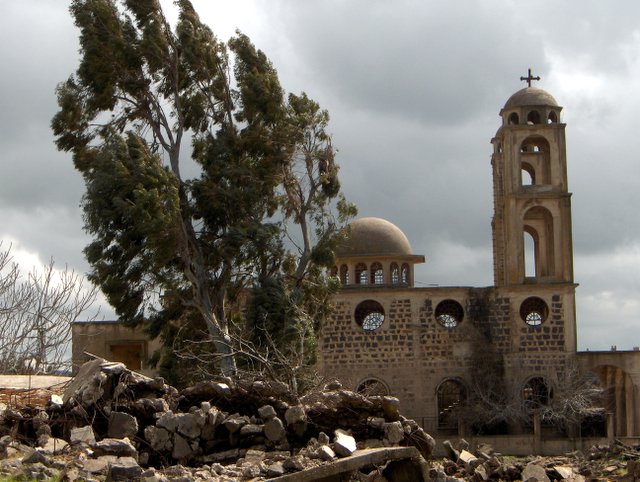
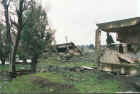
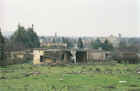
Golan Heights is internationally known primarily due to its occupied status by Israel since the 1967 wars. With the time available to my visiting friends, we decided to visit and see with our own eyes the reality on the ground over what is internationally being debated. Hence the visit to this town in the Golan Heights called Quneitra. It is situated in southern Syria, bordering Lebanon, Jordan and Israel. One could only visit it by obtaining a special permit from the Ministry of the Interior. Got the necessary permit and off we went (me and a couple of friends visiting Syria) in two separate cars. The area that we visited now lies in the demilitarized United Nations Disengagement Observer Force (UNDOF) Zone between Syria and Israel, a short distance from the de facto border between the two countries. Quneitra lies undisturbed ever since, a ghost town riddled with land mines, an open-air museum of Middle-Eastern wars (Syria now shows it off as proof of Israeli malice). Church domes and minarets, blackened and broken, rise above the wasteland..

read further.......
[]

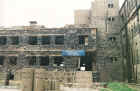
Quneitra is indeed a gorgeous place to visit despite what had happened to it. However, I would not say that our group enjoyed the visit – how could one claimed to be enjoying walking through the bulldozed ruins of a once-normal town. Seeing the extent of destruction left behind by Israel, one could really sympathize with the feelings of those Syrians whose families come from the Golan and who cannot live there now. We were informed that families kept bringing the younger generations to visit their lands and what is left of their homes to keep the memories alive and continuous hopes of coming back to the land.

We left Quneitra with mixed emotions thinking how fortunate we as Malaysian has been and at the same time thinking of the suffering of the local Quneitrans and also those Syrians that are still living in the Occupied Golan Heights.

Descriptions of Quneitra by media reports in the past:

“Direct evidence of the city's condition was provided when it was filmed on 12 May 1974 by a British television news team which included the veteran journalist Peter Snow, who was reporting for Independent Television News on the disengagement negotiations. His report was broadcast on ITN's News at Ten programme. According to The Times' correspondent Edward Mortimer, "viewers were thus afforded a panoramic view of the city, which had stood almost completely empty since the Syrian army evacuated it in 1967. It could be seen that many of the buildings were damaged, but most of them were still standing." After it was handed over, "very few buildings were left standing. Most of those destroyed did not present the jagged outline and random heaps of rubble usually produced by artillery or aerial bombardment. The roofs lay flat on the ground, 'pancaked' in a manner which I am told can only be achieved by systematic dynamiting of the support walls inside." Mortimer concluded that the footage "establishes beyond reasonable doubt that much of the destruction took place after 12 May—at a time when there was no fighting anywhere near Quneitra”


Some other pictures ..... trail of destruction!!


Subscribe