RSS Feed
TOP

Belly Dancing in Damascus


Took my visiting friends for a belly dancing show at a restaurant on the 7th Floor of Semi Ramis Hotel in Damascus to expose and educate them on some form of Syrian or Arab culture. The restaurant that evening was full of foreign tourists as well as local Syrians who came for the show. It was a memorable experience for us all especially coming from Asia. Though there are some establishments in Malaysia that offers occasional belly dancing shows, it is of totally different especially with the accompaniment of live music from traditional instruments. The show only started at 11.00 pm with a singer and followed by the belly dancer only 30 minutes later. The show ended only at about 12.30 midnight.

read further.......
[−]

Did you know the correct name for belly dancing is actually "Oriental Dance"? The Arabic name for it is raqs sharqi, which means "dance of the East/Orient", and the Turkish name is Oryantal.

Based on information gathered from various blogs, I shared the following:

True historical data on belly dance is fragmentary -- there is relatively little documentation on women's work and activities throughout the age of literacy. Current theories on the history of belly dance are a confusing mixture of speculative extrapolation and personal bias which is then often presented as historical fact. It is hard to say when "belly dancing" started and where. Despite the lack of accurate historical information, a few points can be agreed upon. Belly dancing as it is known today is very old. It retains its connection to fertility and eroticism by being an indispensable feature at weddings in many Middle Eastern countries, performing the multifold purpose of getting the bride and groom (who may have just met) in the mood, making a blessing of fertility on the couple, and providing entertainment for the guests. Today belly dance is enjoyed variously for its artistry, ethnicity, beauty, healthy eroticism and fun!

The movement vocabulary of belly dance is a conglomeration of styles from many regions-Lebanon, North Africa, Egypt, the Arabian Gulf, Turkey - as a result of cultural exchange historically through trade and shifting national boundaries. While Middle Easterners make the distinction between "city dance" (stage, cabaret) and "country dance" (regional folk dances), Westerners use the umbrella term of "belly dance" to refer to a broad range of styles united in the use of certain isolation movements, the most prominent and pervasive of which are the isolations of the hips. In addition, isolations of the chest, shoulders, head, hands as well as serpentine and undulating movements of the torso are often found. Another common trademark is a varying degree of flirtation and coquetry. The rhythms and instrumentation used from area to area often have some commonalties despite great regional variations but in all there is an emphasis on percussion.

Across borders and cultures, "belly dance" is recognized as a dance style of its own. There are several points that make oriental dance different from other dance forms and reveal its diverse heritage. It has traditional associations with both religious and erotic elements. This ambiguity has caused belly dance to be disdained, scorned, and loved by many. Its apparent origins are the fertility cults of the ancient world.

Many experts say belly dancing is the oldest form of dance, having roots in all ancient cultures from the orient to India to the mid-East. Probably the greatest misconception about belly dancing is that it is intended to entertain men. Throughout history, this ritualized expression has usually been performed for other women, generally during fertility rites or parties preparing a young woman for marriage. In most cases, the presence of men is not permitted.

In the word of a belly dancer, Nadia Gamal in an interview with Scoop Magazine:
“I am NOT a belly dancer. I have never been one, and never will be. What I do is not what Hollywood vulgarly calls ‘belly dance’, but it is art. I have traveled the world to prove that my dance is not a dance of the belly but a refined, artistic dance full of tradition, of dreaming and beauty. Oriental dance is primarily an expressive dance, in that resides the beauty”


Another picture ..... the beauty of belly dancing!!


Subscribe


TOP

A town named Quneitra, Golan Heights


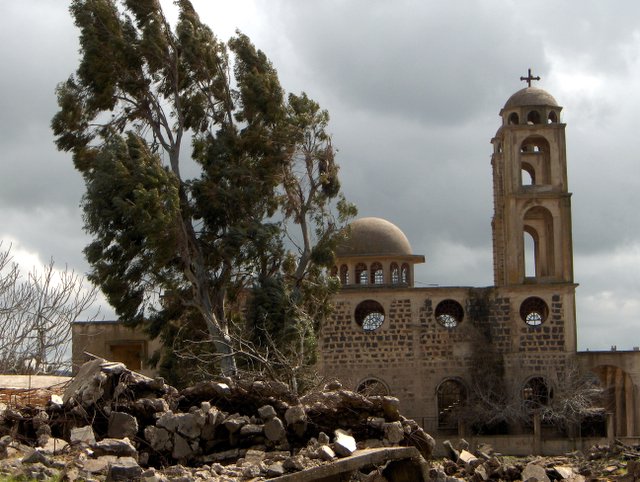
Golan Heights is internationally known primarily due to its occupied status by Israel since the 1967 wars. With the time available to my visiting friends, we decided to visit and see with our own eyes the reality on the ground over what is internationally being debated. Hence the visit to this town in the Golan Heights called Quneitra. It is situated in southern Syria, bordering Lebanon, Jordan and Israel. One could only visit it by obtaining a special permit from the Ministry of the Interior. Got the necessary permit and off we went (me and a couple of friends visiting Syria) in two separate cars. The area that we visited now lies in the demilitarized United Nations Disengagement Observer Force (UNDOF) Zone between Syria and Israel, a short distance from the de facto border between the two countries. Quneitra lies undisturbed ever since, a ghost town riddled with land mines, an open-air museum of Middle-Eastern wars (Syria now shows it off as proof of Israeli malice). Church domes and minarets, blackened and broken, rise above the wasteland..

read further.......
[−]

Quneitra is indeed a gorgeous place to visit despite what had happened to it. However, I would not say that our group enjoyed the visit – how could one claimed to be enjoying walking through the bulldozed ruins of a once-normal town. Seeing the extent of destruction left behind by Israel, one could really sympathize with the feelings of those Syrians whose families come from the Golan and who cannot live there now. We were informed that families kept bringing the younger generations to visit their lands and what is left of their homes to keep the memories alive and continuous hopes of coming back to the land.

We left Quneitra with mixed emotions thinking how fortunate we as Malaysian has been and at the same time thinking of the suffering of the local Quneitrans and also those Syrians that are still living in the Occupied Golan Heights.

Descriptions of Quneitra by media reports in the past:

“Direct evidence of the city's condition was provided when it was filmed on 12 May 1974 by a British television news team which included the veteran journalist Peter Snow, who was reporting for Independent Television News on the disengagement negotiations. His report was broadcast on ITN's News at Ten programme. According to The Times' correspondent Edward Mortimer, "viewers were thus afforded a panoramic view of the city, which had stood almost completely empty since the Syrian army evacuated it in 1967. It could be seen that many of the buildings were damaged, but most of them were still standing." After it was handed over, "very few buildings were left standing. Most of those destroyed did not present the jagged outline and random heaps of rubble usually produced by artillery or aerial bombardment. The roofs lay flat on the ground, 'pancaked' in a manner which I am told can only be achieved by systematic dynamiting of the support walls inside." Mortimer concluded that the footage "establishes beyond reasonable doubt that much of the destruction took place after 12 May—at a time when there was no fighting anywhere near Quneitra”


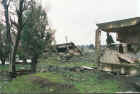
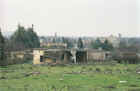
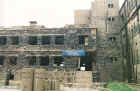
Some other pictures ..... trail of destruction!!


Subscribe


TOP

A Cultural Evening to Cherish


It was indeed a cultural evening which will be long cherished by all those presence at the Four Seasons Hotel in Damascus. Dancing to the upbeat traditional Malaysian music, the crowd was highly appreciative of the performances of the dancers by clapping their hands to the rhythm of the music. The cultural troupe was flown in by Malaysia Tourism Board as part of their road show to promote Malaysia to the Syrians. As a Malaysian residing abroad, one would always tend to look forward to such events where one could be proud to showcase our culture to others. As a country that is well known for its multi-ethnicity, multicultural and multi-religious society, Malaysia has proven to the world that peace is achievable so long as society remains tolerance and respect one another. That makes Malaysia such an attractive country to foreigners besides of course the natural beautiful beaches and mountains that surrounds the country. .

read further.......
[−]

It is however unfortunate that Malaysia has been hogging the media limelight due to the wrong reasons of late. The political fiasco in Perak and the high incidents of petty crimes such as snatch thefts are not helping the serious efforts of the Malaysia Tourism Board to promote the country as a preferred holiday destination. On another note also, Malaysia Tourism Board need to remain focus on the quality of tourists into the country and not be too engrossed with only number of arrivals into the country. A comprehensive study must be conducted to ensure that Malaysia receives “real” tourists and not travelers that used the visa upon arrival facilities for other reasons which could jeopardize the security of the nation in the future. Malaysia must implement a mechanism whereby unwanted elements such drug traffickers, economic refugees, etc. could be weeded out from availing to such facilities in the future.


Subscribe


TOP

Reform of the Civil Service

Process of reform within any organization - be it small or large – is a continuous process to ensure the organization’s continued relevance, efficiency and effectiveness. As such, the proposal mooted by PM Dato’ Seri Najib Razak should be looked welcomed by the civil service to ensure continuous efficient delivery system to the public. In implementing the proposal, however, government needs to look at the issue comprehensively and not solely on the ability or capability of officers only. There are other contributing factors that determine the organization’s efficiency and effectiveness such as the operating guidelines or procedures. Interdepartmental rivalry issues need to be reined in to ensure that policies and its implementation are supportive of national interests and not merely any particular department’s interest. There have been too many instances where certain programs introduced by departments had negated the overall national agenda..

read further.......
[−]

The public service department had actually implemented exchange programs for senior public officials to be seconded to private companies for the last 10 years. But yet whatever experience gain by the program has not really benefitted the service in general. Perhaps, there is a need to re-look at such program and see how it could be further improved to meet the objective and guidelines for the proposed structural reform mooted by PM. Government should also look at why departments that had been privatized performed better than when they were a government entity. Such departments include Tenaga, Inland Revenue Board, and many others. Putting it simply, their working environment changed. They are operating on different set of procedures, rules and guidelines. Decisions reached are more in-house – by the Board of Directors. Government departments meanwhile had to follow different sets of outdated rules and procedures which had indirectly constraints their decision-masking process and effectiveness because it had first to undergo the various interdepartmental/ministries reviews and opinions before it could actually be implemented. Thus, it is imperative to comprehensively look at existing guidelines and procedures and not merely at the issue of staff capability/talent. This would ensure the success of the proposed structural reform of the public service.


Subscribe


TOP

Changing the Global Economic & Financial Agenda

The ongoing global financial and economic crisis is perhaps a blessing especially to the developing and under-developed countries. It helps to bring to the fore the many anomalies existing in the world economies under the pretext of globalization. The call for globalization which was primarily aimed at bringing equal opportunities for all to compete has not sincerely been true to the letter when it comes to the actual implementation. In reality it merely another form of power wielding instruments by the powerful economies on the poor struggling economies. What we have seen over the years is that the concept of the "global economy" is very often an exaggerated one, generating confusion and negative political consequences to the less developed economies..

read further.......
[−]

Reforms that are both necessary and feasible at the national level, such as appropriate exchange rate, fiscal and monetary policies (especially in normal times) or capital controls, are rejected as incompatible with the "global economy". Developing and impoverished nations are often tasked to look to supra-national institutions that are mainly deregulatory, unaccountable and regressive – the International Monetary Fund, World Bank and World Trade Organization are prime examples – to resolve the problems that these institutions have themselves helped to create. They are expected to tow the lines of the developed nations through various arm twisting strategies by such institutions and yet their country’s economies remain in a mess and they eventually lose total ownership of not only their economy but also their country’s policy and direction. It is at times being used to affect regime change or governments that are considered as not “western friendly”. It is another form of colonization in its “ugliest” form.

But the day the world economy was at risk of facing global recession, the powerful economies asked others to get their act together. Policies which are taboo under the eyes of the supra-national institutions before such as government bailout of private companies, is okay for implementation by the rich nations in facing the bankrupt and screwed up financial institutions. The current world recession is much worse and more widespread than the crisis of the late 1990s. The high-income countries that comprise the majority of the world economy, including the US, EU and Japan are mostly in recession. And there are major weaknesses in much of the world's financial system that must be urgently addressed in a transparent manner. It is good that the G20 leaders are at least talking about increased international co-operation in order to deal with the world recession, and there are some areas – such as regulation of the financial sector or preventing illegal international capital flows and international tax avoidance – where increased international co-operation can be especially helpful. But it must be fair and transparent. Developed nations should not only condemned protectionism and but must remain committed themselves not to engage in it. Unfortunately, a World Bank study notes that 17 of the 20 countries have actually undertaken new protectionist measures. So how could they expect others to not engage in protectionism when that is what they are doing to save their economy?

The international community must use this opportunity to regulate and iron out irrationalities and instabilities inherent in the so-called "global economy". There must be concerted efforts to redraw the rules for global commerce in a more equitable and rational manner – such as those of the UN commission headed by Joseph Stiglitz – are a vital part of creating a better future for the generations to come. But the world cannot wait for the time when the governments of the rich countries are willing to cede decision-making power to institutions – such as the United Nations – that they cannot completely dominate.

Let us all jointly work toward a fair, equitable and transparent global economic and financial agenda.


Subscribe